Understanding the ABCDEs of Mole Changes
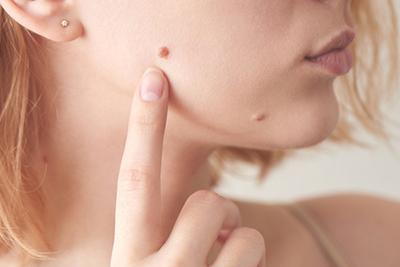
- posted: Jul. 23, 2025
Spotting the Subtle Signs: Why Moles Matter
Most of us have moles. They’re usually harmless, often unchanged for years—but what happens when one starts to look… different?
At Dermatology & Dermatologic Surgery Group of Northern Virginia, our team encourages patients to become familiar with a simple but powerful tool in skin cancer awareness: the ABCDEs of mole evaluation. These guidelines can help you recognize early signs of melanoma, the most serious type of skin cancer.
The ABCDE Rule: What to Watch For
Each letter in “ABCDE” stands for a specific trait to observe in any mole or skin spot that seems suspicious.
A – Asymmetry
If you were to draw a line through the mole, would both halves match? Benign (noncancerous) moles are usually symmetrical, while asymmetry can be a red flag.
B – Border
Look closely at the edges. Healthy moles tend to have smooth, even borders. If the edges are irregular, blurred, or jagged, it’s a sign to get it checked.
C – Color
Moles that are all one color—usually brown—are generally normal. Moles with multiple shades (tan, black, red, white, or blue) or uneven color distribution should be evaluated by a dermatologist.
D – Diameter
Size matters. A mole larger than 6 millimeters (about the size of a pencil eraser) may be concerning, though skin cancers can be smaller, too.
E – Evolving
Has the mole changed? Any shift in size, shape, color, texture, or symptoms like itching or bleeding should prompt a professional skin check.
Why Early Detection Saves Lives
Melanoma can grow and spread quickly, but when it’s caught early, treatment is often highly effective. That’s why keeping an eye on your skin—and knowing what to look for—is essential.
If you’ve noticed a mole that’s changed or just doesn’t seem right, don’t wait. Trust your instincts and let a board-certified dermatologist take a closer look.
Skin Checks: When and How Often?
It’s a good idea to do a self-skin exam once a month, especially if you have risk factors like:
- A history of sunburns or tanning bed use
- A family history of skin cancer
- Fair skin, freckles, or light hair
- A large number of moles
We also recommend annual skin exams by a dermatologist, or more often if you’re at higher risk.
Your Skin Deserves Expert Attention
At Dermatology & Dermatologic Surgery Group of Northern Virginia, PLLC, we’re committed to your skin health at every stage of life. Whether you’re monitoring a few freckles or have a spot that’s changed, we’re here to provide clarity and care.
Call us at (703) 938-5700 to schedule a skin check today. Located in Vienna, VA, our team is ready to help you stay one step ahead of skin cancer.
- posted: Jul. 23, 2025
Spotting the Subtle Signs: Why Moles Matter
Most of us have moles. They’re usually harmless, often unchanged for years—but what happens when one starts to look… different?
At Dermatology & Dermatologic Surgery Group of Northern Virginia, our team encourages patients to become familiar with a simple but powerful tool in skin cancer awareness: the ABCDEs of mole evaluation. These guidelines can help you recognize early signs of melanoma, the most serious type of skin cancer.
The ABCDE Rule: What to Watch For
Each letter in “ABCDE” stands for a specific trait to observe in any mole or skin spot that seems suspicious.
A – Asymmetry
If you were to draw a line through the mole, would both halves match? Benign (noncancerous) moles are usually symmetrical, while asymmetry can be a red flag.
B – Border
Look closely at the edges. Healthy moles tend to have smooth, even borders. If the edges are irregular, blurred, or jagged, it’s a sign to get it checked.
C – Color
Moles that are all one color—usually brown—are generally normal. Moles with multiple shades (tan, black, red, white, or blue) or uneven color distribution should be evaluated by a dermatologist.
D – Diameter
Size matters. A mole larger than 6 millimeters (about the size of a pencil eraser) may be concerning, though skin cancers can be smaller, too.
E – Evolving
Has the mole changed? Any shift in size, shape, color, texture, or symptoms like itching or bleeding should prompt a professional skin check.
Why Early Detection Saves Lives
Melanoma can grow and spread quickly, but when it’s caught early, treatment is often highly effective. That’s why keeping an eye on your skin—and knowing what to look for—is essential.
If you’ve noticed a mole that’s changed or just doesn’t seem right, don’t wait. Trust your instincts and let a board-certified dermatologist take a closer look.
Skin Checks: When and How Often?
It’s a good idea to do a self-skin exam once a month, especially if you have risk factors like:
- A history of sunburns or tanning bed use
- A family history of skin cancer
- Fair skin, freckles, or light hair
- A large number of moles
We also recommend annual skin exams by a dermatologist, or more often if you’re at higher risk.
Your Skin Deserves Expert Attention
At Dermatology & Dermatologic Surgery Group of Northern Virginia, PLLC, we’re committed to your skin health at every stage of life. Whether you’re monitoring a few freckles or have a spot that’s changed, we’re here to provide clarity and care.
Call us at (703) 938-5700 to schedule a skin check today. Located in Vienna, VA, our team is ready to help you stay one step ahead of skin cancer.
Dermatology & Dermatologic Surgery Group of Northern Virginia, PLLC
243 Church Street NW, Suite 200-C,
Vienna, VA 22180
Monday - Friday
9:00 am - 12:30 pm
1:30 pm - 4:30 pm
Saturday, Sunday
Closed